
 Pay Bill
In Summary:
Rising geopolitical tensions involving Iran have heightened concerns about potential disruptions in the Strait of Hormuz, a critical chokepoint that handles about 20% of global oil supply. Any blockage or prolonged conflict could significantly reduce global energy flows, driving oil and gasoline prices higher worldwide. Even countries with limited reliance on Iranian oil, like the U.S., may feel the impact due to the interconnected nature of global energy markets.
Key Takeaways:
- The Strait of Hormuz carries ~20% of global oil supply
- Disruptions can quickly increase oil and gas prices
- Iran tensions could lead to global energy market volatility
Written by Steven Eilders, Manager
Many people have seen the latest news reports about rising tensions involving Iran and are wondering what this might mean for the oil and gas industry, particularly gasoline prices. Iran is positioned to have a significant impact on the global oil supply due to its geographic control over the Strait of Hormuz, one of the most important energy transit routes in the world. Iranian officials have recently stated that they may block or attack ships attempting to pass through the strait, which could disrupt global oil markets even further.
What Is the Strait of Hormuz and Why Is It Important?
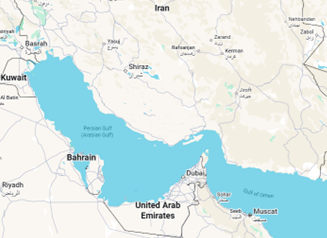
The Strait of Hormuz is a narrow sea passage connecting the Persian Gulf with the Gulf of Oman and the Arabian Sea. Although the strait is roughly one hundred miles wide at its widest point, it narrows to about twenty-one miles at its narrowest.
Under international maritime law, coastal countries can exercise territorial control up to twelve nautical miles or 13.8 miles from their shores. At its narrowest point, this means the strait is controlled by Iran on the northern side and Oman on the southern side.
Additionally, the world’s largest oil-producing nations, Kuwait, Bahrain, Qatar, and Saudi Arabia, are located around the Persian Gulf. Because of this, approximately twenty million barrels of oil pass through the Strait of Hormuz each day, making it one of the most critical oil chokepoints in the global energy system.
Why the Strait of Hormuz Matters for Global Oil Supply
According to the U.S. Energy Information Administration (EIA), this volume represents roughly 20% of global petroleum consumption and about one-quarter of the world’s seaborne oil trade. In addition to crude oil and petroleum products, nearly 20% of the world’s liquefied natural gas (LNG) shipments, much of it exported from Qatar, also travels through the strait.
While there are a few alternative routes such as pipelines and other shipping pathways, the EIA states that these alternatives cannot manage the same volume that typically moves through the strait. As a result, any disruption or delay in traffic through the Strait of Hormuz can immediately impact global oil supply, often leading to rising oil prices.
Following recent Israeli and U.S. strikes on Iranian targets, Iran’s Islamic Revolutionary Guard Corps declared the Strait of Hormuz closed and warned that ships attempting to pass could be attacked. In response, U.S. officials indicated that the U.S. Navy may escort oil tankers through the strait to ensure the flow of energy supplies continues.
How Iran Tensions Could Impact Oil Prices in 2026
Over the past two weeks, West Texas Intermediate (WTI) crude oil prices have risen to $96.21 (as of March 17), up from $65.30 before the start of the conflict, approximately a 47.34% increase. The future impact on oil prices will depend on how long tensions and disruptions persist. A prolonged blockage of the Strait of Hormuz would threaten global oil supply and has the potential to drive prices significantly higher.
While the United States does not rely heavily on Iranian oil, it does rely on the global oil supply flowing from other Middle Eastern producers that must pass through the Strait of Hormuz. If those shipments are disrupted, it could reduce global supply and increase energy prices worldwide, including gasoline prices in the United States.
Ultimately, oil prices will depend on whether the conflict escalates, how long shipping disruptions last, and whether alternative supply routes can offset reduced flows through the strait.
What Rising Oil Prices Mean for Gas Prices and Consumers
For consumers, the situation in the Strait of Hormuz will most directly be felt through higher energy costs, particularly gasoline prices. Because crude oil is the primary input used to produce gasoline, diesel, and jet fuel, increases in oil prices typically translate into higher prices at the pump.
Even though the United States does not rely heavily on Iranian oil imports, the global oil market is interconnected. When supply disruptions occur anywhere in the world, prices rise for everyone. If the conflict leads to reduced shipments from major Middle Eastern producers such as Saudi Arabia, Kuwait, or Qatar, the global supply of oil will tighten and drive prices higher worldwide.
Historically, increases in crude oil prices tend to pass through to gasoline prices relatively quickly. This means consumers could see higher fuel prices, increased transportation costs, and potentially higher prices for goods and services, since shipping and production costs often rise along with energy prices.
The overall impact will depend on how long the tensions last. If shipping through the Strait of Hormuz resumes normally in an abbreviated period, oil prices may stabilize. However, if the conflict leads to a prolonged disruption in oil supply, consumers could face sustained increases in gasoline prices.
If you would like to talk to an advisory professional about this or other concerns, please visit our website or call our office at (833) CPA-BMSS.
BMSS Is Here to Help
BMSS’ Natural Resources team brings decades of experience serving oil and gas companies, providing specialized accounting, tax, and advisory services tailored to the complexities of the energy industry. With deep knowledge of financial reporting, state and local tax regulations, and strategic planning, the team works closely with clients to improve efficiency, ensure compliance, and support long-term growth. By partnering with businesses across the energy sector, from producers to service providers, BMSS delivers practical insights and customized solutions designed to help companies navigate market volatility and achieve their financial goals.